
OVTW Wire-Rope Isolators
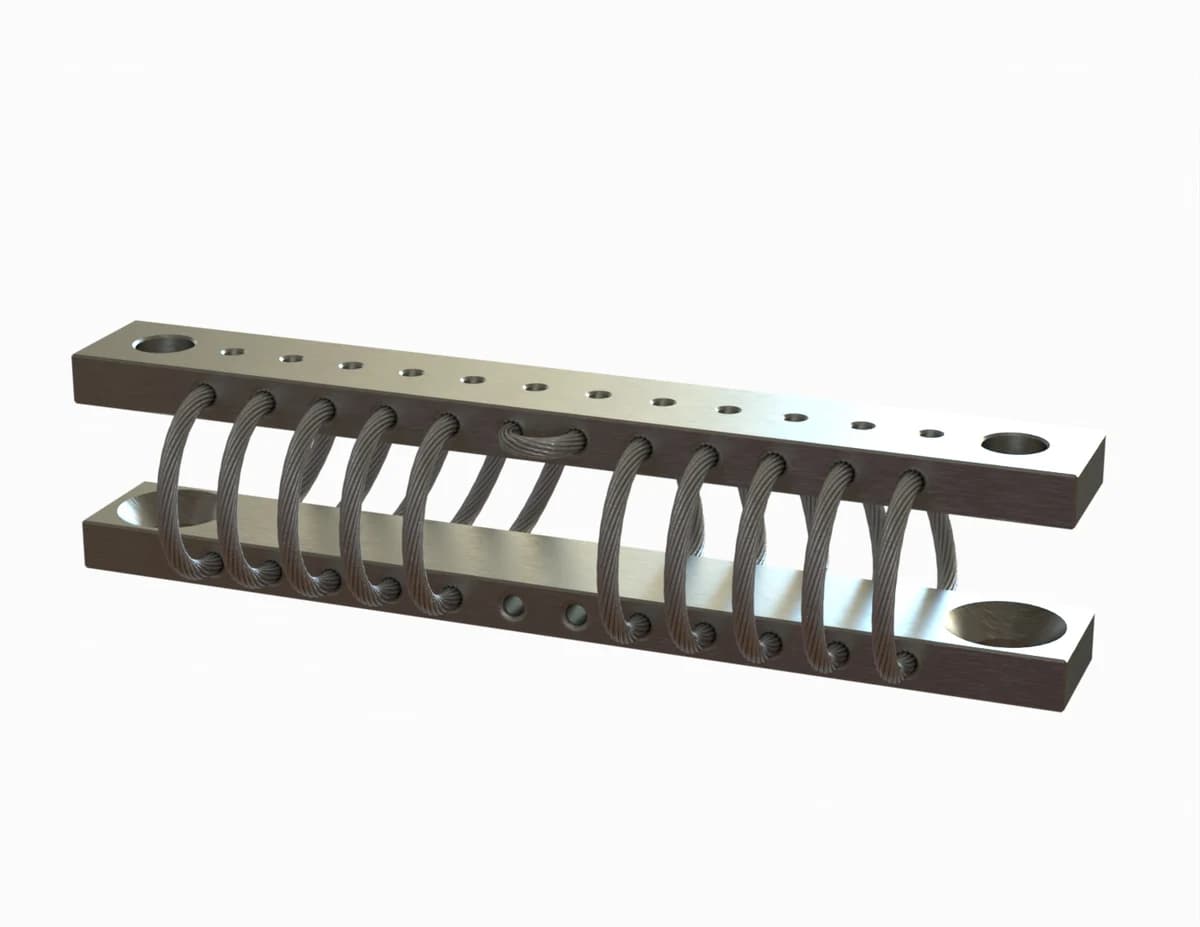
OVTW16-20-10 Wire Rope Vibration Isolator
OVTW16-20-10 vibration isolator with a Z-direction rated load of 27 N and Z-direction static stiffness of 14.71 N/mm. Review directional specifications and mounting requirements for your equipment.
- Z rated load (N)
- 27
- Z static stiffness (N/mm)
- 14.71
- Z deflection at rated load (mm)
- 0.5~3.5
- Weight (kg)
- 0.02
Model specifications
Performance and key specifications
- Weight (kg)
- 0.02
- Damping ratio (C/Cc)
- 0.2
- Z maximum allowed deflection (mm)
- 9.7
- Z static stiffness (N/mm)
- 14.71
- Max static load · Angled (N)
- 24
- Max deflection · Angled (mm)
- 14.7
- Vibration stiffness · Angled (N/mm)
- 14
- Z deflection at rated load (mm)
- 0.5~3.5
- Z natural frequency (Hz)
- 15.68
- Shock stiffness · Angled (N/mm)
- 7.0
- Z rated load (N)
- 27
- Z shock stiffness (N/mm)
- 16
Load cases
- Max deflection · Shear (mm)
- 10.7
- Vibration stiffness · Shear (N/mm)
- 8.8
- Vibration stiffness · Compression (N/mm)
- 25
- Shock stiffness · Shear (N/mm)
- 8.8
- Shock stiffness · Compression (N/mm)
- 16
- Max static load · Shear (N)
- 18
- Max deflection · Compression (mm)
- 9.7
- Max static load · Compression (N)
- 36
X / Y direction specifications
- X rated load (N)
- 12.6
- X natural frequency (Hz)
- 13.18
- Y maximum allowed deflection (mm)
- 10.7
- Y deflection at rated load (mm)
- 0.5~3.5
- Y static stiffness (N/mm)
- 5.18
- X maximum allowed deflection (mm)
- 10.7
- X static stiffness (N/mm)
- 5.18
- X shock stiffness (N/mm)
- 8.8
- X deflection at rated load (mm)
- 0.5~3.5
- Y shock stiffness (N/mm)
- 8.8
- Y natural frequency (Hz)
- 13.18
- Y rated load (N)
- 12.6
Selection and installation
Check compression, 45° compression/roll and shear/roll values against the actual mounting direction. Rated load and maximum static load are different limits. Keep the full model suffix and specify the mounting-hole arrangement and loading direction with your inquiry.
Series working principle
Stranded steel cable deforms between mounting bars. Friction between the strands dissipates energy; stiffness varies with displacement and load direction.
Catalog application and mounting notes
OVTW16-20-10 is a wire-rope isolator in the OVTW16 series. The 2024 isolator catalog provides the series dimensional drawing and mounting arrangements, together with a model-specific row for compression, 45° compression/rolling, and shear/rolling. Load, displacement and stiffness depend on the loading direction; select using the corresponding catalog condition rather than applying one direction's rating to every installation. Confirm mounting orientation, bolt interface, available clearance and the supported load before ordering.
Continuous vibration or transport shock?
Use a vibration-isolation review for pumps, cabinets and transported equipment. The motion-sizing calculator covers supported end-stop shock absorber cases; it does not calculate isolation performance.
I only know the equipment weight. Can I start?
Yes. Send the weight, support layout, equipment type and any photos or test report. Mark frequency or shock data as unknown; engineering review must establish them before a performance claim can be made.
Can I divide the total weight by four mounts?
Only a symmetric layout with a centered center of gravity and the corresponding static assumptions supports equal sharing. An offset center of gravity, torque or transport acceleration can produce unequal loads. Supply support positions and the center of gravity, or mark it unknown.
Rubber or wire rope isolators?
Compare the required frequency range, load direction, allowable displacement, damping and environment. Neither material is universally better. Directional load and stiffness data, shock conditions and durability requirements determine the candidate.
Unknown data is welcome: say what is measured, estimated or not yet known. Photos, drawings and existing test records help define the next checks.
Send an isolation briefDrawings and documents
Open approved PDFs without signing in. Sign in for DWG and STEP files; request formats that are not yet approved.
Specification sources
Specifications follow the current model catalogue, supported by the referenced catalogue pages and the product database model record.
- Vibration isolator catalogue (Chinese, 2024) · pp. 12, 13
- Product database: corresponding model record